
Your car runs on more wiring than most people realize. Every switch, sensor, and module talks to the others through a web of wires, connectors, grounds, and fuses. When one of those connections corrodes, loosens, or rubs through, something downstream stops working right, and sometimes a part that seems unrelated goes dark too, because electrical problems do not always show up where the actual fault is. Heat, moisture, road salt, and just plain age wear on connectors over the years, especially in a coastal climate like Summerville and North Charleston where salt air and humidity speed up corrosion. Rodents chewing on wires under the hood is another one we see a lot, especially on cars that sit for a while between drives, since engine bays stay warm and quiet, which mice and rats like.
Signs You Have An Electrical Problem
- Dashboard lights flicker or dim when you turn on the AC or headlights
- Car cranks slow or clicks but won't start, even with a good battery
- Power windows, locks, or seats work sometimes and not other times
- Interior lights or radio cut out randomly while driving
- A burning smell or a fuse keeps blowing no matter how many times you replace it
- Battery keeps dying overnight even though you drive the car every day
We do not start swapping parts and hoping something fixes it. Electrical gremlins have a way of costing people money when the guesswork approach gets used, since the part that gets replaced is not always the part that failed. We pull up wiring diagrams for your specific make and model and test the circuit with a multimeter or oscilloscope, checking voltage, resistance, and ground connections at each point along the way. That tells us whether the problem is a bad component, a broken wire, a blown fuse, or a corroded connector hiding behind a harness clip. It takes longer than guessing, but it means you are not paying to replace an alternator, module, or sensor that was never the problem to begin with.
Once we know what's actually wrong, the fix depends on what we find during testing. A corroded connector gets cleaned or replaced outright if the pins are too far gone to seal properly again. A chewed wire gets spliced and protected, usually with loom or tape that holds up better against future rodent damage. A failing module, relay, or switch gets swapped out once we confirm it is actually bad and not just a symptom of something upstream. If the issue is grounding, we check and clean the ground straps between the engine, body, and battery, since a weak ground can cause flickering, slow cranking, or accessories that act strange for no clear reason. We test the fix under real conditions before calling it done.
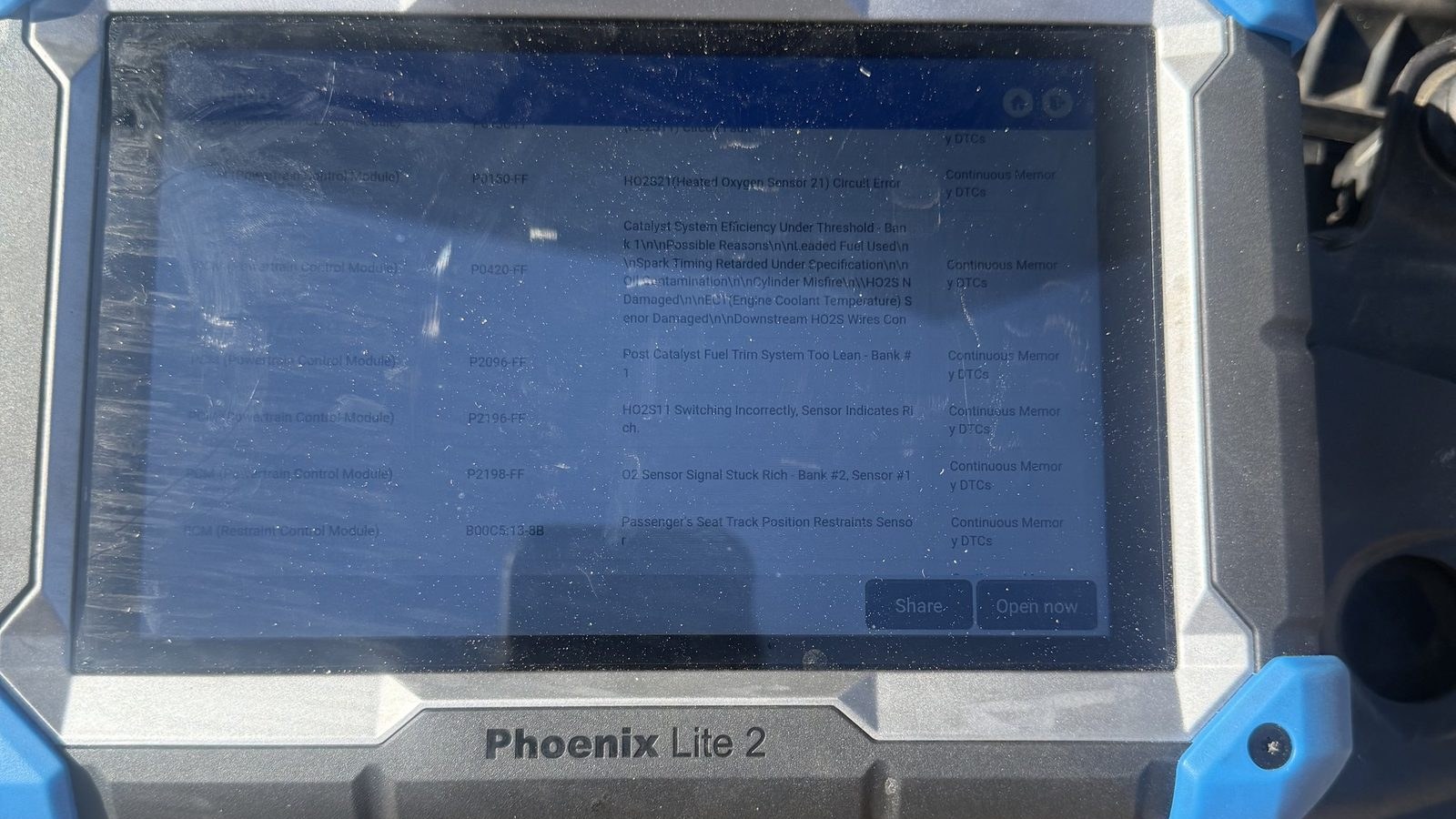
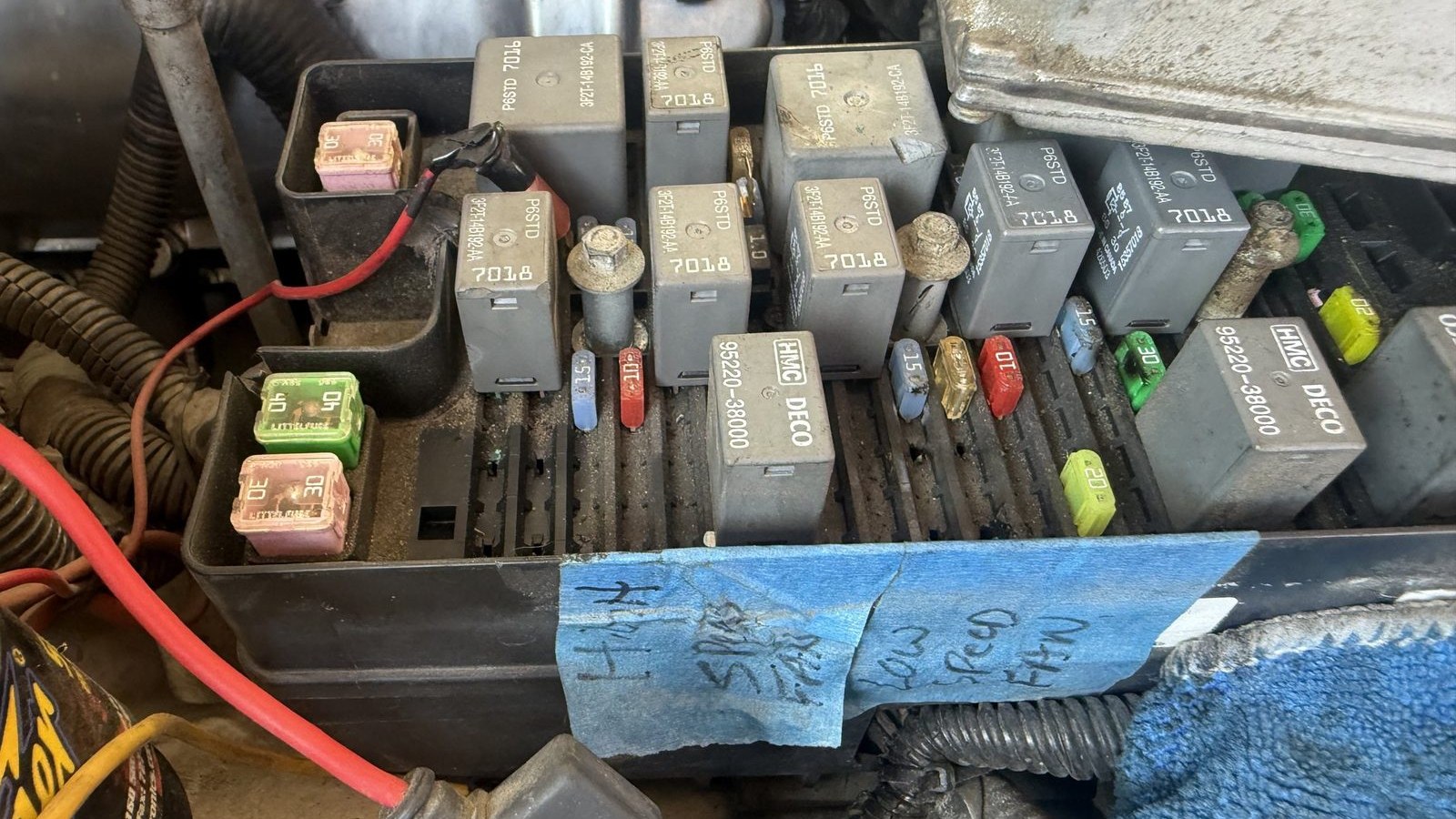

That testing means turning on accessories, running the engine, and checking that the problem does not come back once things warm up or vibrate the way they would on an actual drive. Some electrical faults only show themselves under load or heat, so a quick check with the engine off and everything cold will not catch them. We want to see the headlights, blower motor, gauges, and power windows doing what they are supposed to do together, not just one circuit in isolation. If the original complaint was intermittent, we try to recreate whatever conditions triggered it in the first place, since that is the only real way to know the repair actually holds.
Simple jobs, like a blown fuse or a single bad relay, do not take much time once the cause is confirmed. The job gets bigger when the wiring itself is damaged, especially if it runs through the dash, under carpet, or through a wiring harness that's hard to access without pulling trim panels or seats. Intermittent problems are the toughest kind of electrical work, since a wire that only fails when it's hot, cold, or vibrating over bumps can take extra time to track down, because the fault disappears the moment the car sits still on a lift. We will tell you what we found and what it will take before we go further, so you know what you are dealing with.
Until it's fixed, try not to ignore it, because small electrical symptoms tend to point at bigger ones waiting underneath. A flickering dash or intermittent power loss can turn into a car that won't start at all, especially if the root cause is a failing ground or a connector that is slowly working its way to a full break. Dimming headlights, gauges that jump around, or accessories that cut out when you hit a bump are all worth paying attention to instead of writing off as quirks. These are common complaints we hear from drivers across Goose Creek, Hanahan, and Summerville, and they rarely fix themselves with time.
If you smell something burning or see smoke, stop driving the car and get it looked at, since that is a sign of a short or an overloaded circuit that can turn into real damage fast. Otherwise, keep an eye on what triggers the problem, when it happens, what you were doing, what else was running at the time, since that detail helps us find it faster once the car is in front of us. Things like whether it only happens with the A/C or headlights on, or only after the car sits overnight, narrow down the search quite a bit. The more specific you can be about the pattern, the less time we spend chasing it blind.
What to Tell Us When You Call
- Year, make, and model of your car
- What exactly isn't working, lights, windows, starting, radio
- When it happens, all the time, only when cold, only after driving a while
- Anything you've already checked or replaced, like the battery or a fuse

 Supercanic