
Your suspension keeps your tires planted on the road and keeps the ride from beating you up on every bump. The steering system is what turns those tires when you move the wheel. Both systems take a beating from potholes, rough roads, and plain old age. Bushings dry out, ball joints wear loose, and shocks lose their ability to control the bounce. Once parts start wearing, they wear faster, because a loose part lets other parts move more than they should. A worn bushing lets a control arm shift slightly, which puts odd stress on the ball joint next to it, and that joint wears faster than it should. This is why a small clunk now can turn into a bigger repair later if it sits too long. Catching it early keeps the job smaller and keeps your car safer in the meantime, especially around Summerville roads with their share of rough patches and railroad crossings.
Signs You Need Suspension or Steering Work
- Car bounces a lot after hitting a bump
- Steering wheel pulls to one side while driving
- Clunking or knocking sound over bumps
- Tires wearing unevenly on one side
- Steering feels loose or wandery at speed
- Front end dips hard when you brake
We start with a visual inspection and a test drive when needed. We look at tie rods, ball joints, control arm bushings, shocks, and struts for looseness, cracking, or leaking. A leaking strut usually means the seal has failed and the part is done doing its job of controlling bounce. A cracked bushing means rubber has dried out and lost its grip. We also check your tires for uneven wear patterns, since that tells us a lot about what is going on with alignment and suspension parts. Wear on the inside or outside edge of a tire often points to an alignment problem or a worn part letting the wheel sit at the wrong angle. We will show you what we find before recommending any replacement, so you can see the worn part for yourself and understand why it matters before we move forward with anything.
The actual repair depends on what part is worn. Replacing a part usually means removing the old component, installing the new one, and torquing everything back to spec, since suspension and steering bolts hold your wheels in place and need to be tightened correctly every time. Some jobs, like shocks or struts, involve compressing springs safely during the swap, which takes the right tools and care since a spring under tension can be dangerous if handled wrong. After certain repairs we check your alignment, since worn suspension parts can throw off your alignment angles even if the alignment itself was fine before the repair. Skipping that check can mean new parts wear unevenly right out of the gate, which defeats the purpose of replacing them. We treat the alignment check as part of finishing the job right, not as an extra step to skip.
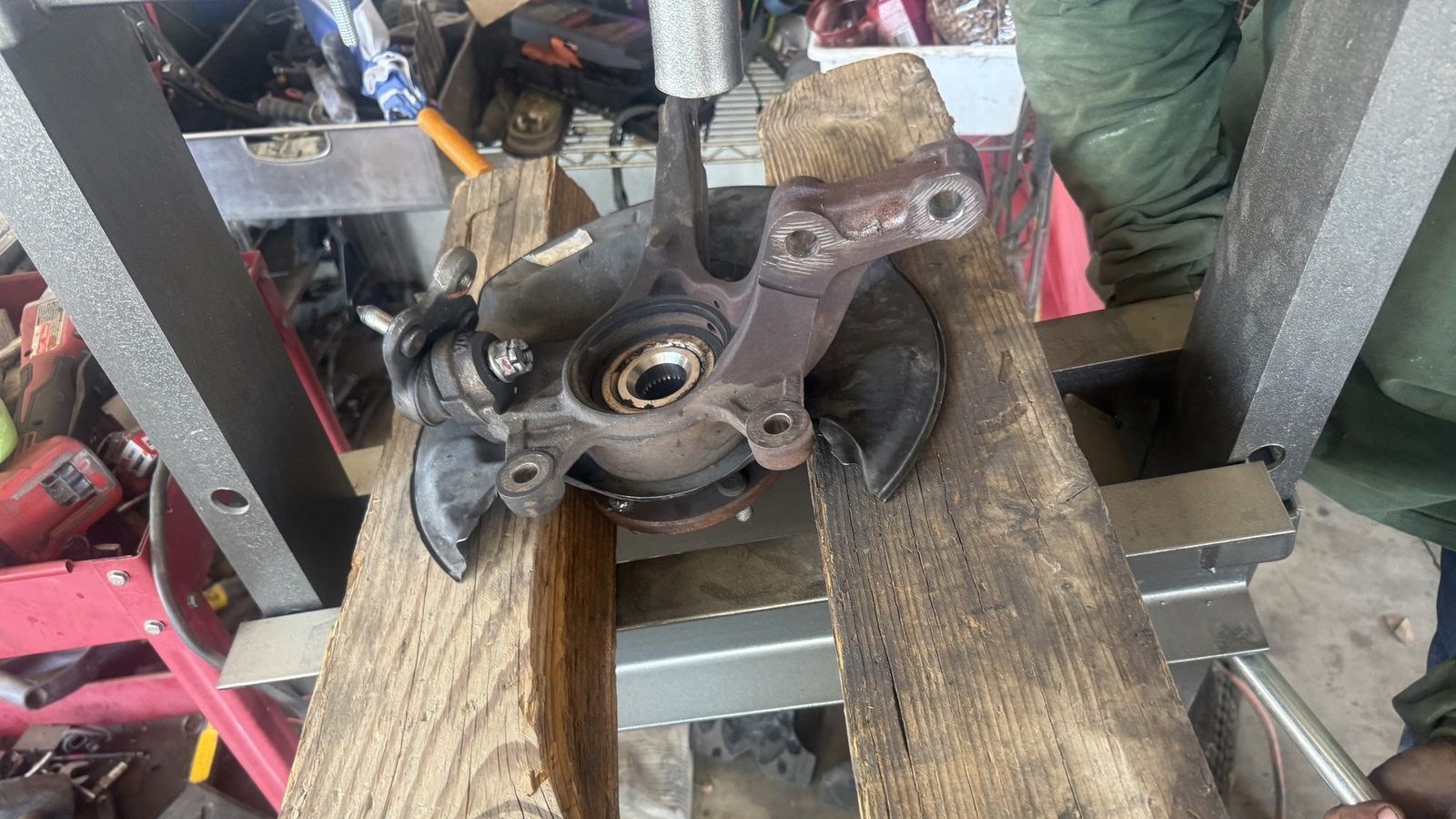

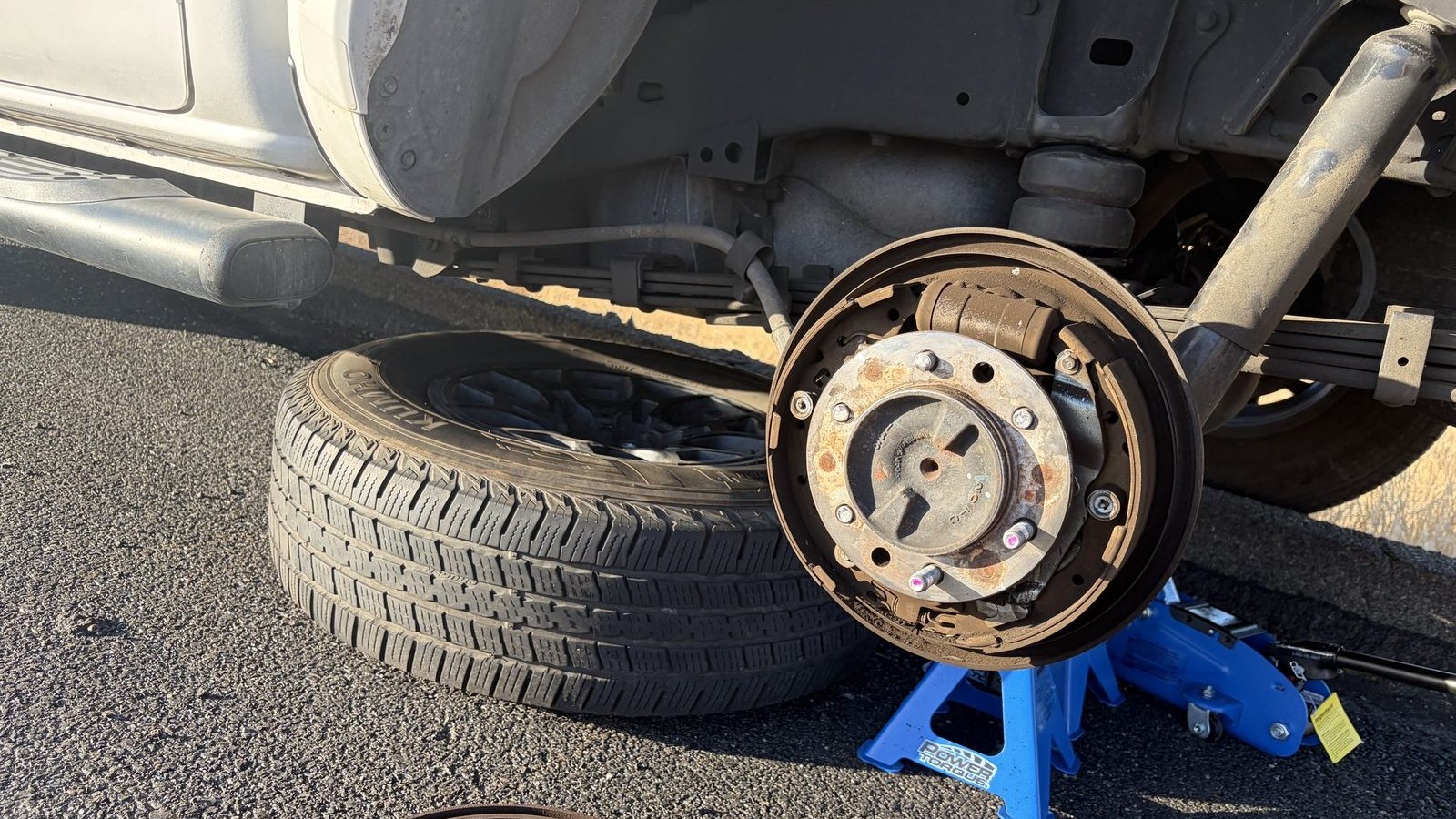
What changes the size of the job is how many parts are worn and how hard they are to access on your particular vehicle. A single tie rod is a smaller job than replacing shocks on all four corners, since more parts means more time and more pieces that have to go back together correctly. Some vehicles tuck these parts in tight spots that take longer to reach, while others leave them exposed and easier to work on. Rust and corrosion on older vehicles can also make bolts harder to remove, which adds time, since a rusted bolt sometimes has to be cut or worked loose carefully instead of just turned out. We see this often on vehicles that have spent years around coastal air and road salt. We will always explain what we are seeing and what your options are before moving forward, so you know what is driving the size of the job.
It helps to know what some of these parts actually do day to day. Ball joints let your wheels pivot when you steer while still carrying the weight of the car. Tie rods connect your steering gear to the wheels so that turning the wheel actually turns the tires. Control arm bushings cushion the connection between your suspension and the frame, soaking up small vibrations before they reach the cabin. Shocks and struts control how much your car bounces after hitting a bump, so a bad one means the car keeps bouncing long after the bump is behind you. When one of these wears out, you usually notice it as extra noise, a looser feel in the wheel, or a ride that feels bouncier or harsher than it used to.
Until your appointment, try to avoid rough roads and potholes if you can. A loose steering or suspension part can get worse fast if it keeps taking hits, since every bump puts more stress on a connection that is already weaker than it should be. Driving gently in the meantime, avoiding hard turns and sudden braking, can buy you some time without making the problem worse. If the car pulls hard to one side or you hear a loud clunk, it is worth getting it looked at sooner rather than later, since those are signs a part may be close to failing rather than just wearing slowly. A pull to one side can also mean a tire issue or alignment problem working alongside a worn part, which is part of why we check tires and alignment together with the suspension itself.
We work on vehicles across Summerville, Goose Creek, and North Charleston, along with drivers from Hanahan, Lincolnville, Charleston, Mount Pleasant, and James Island who come through for suspension and steering work. Whether it is a single worn bushing or a full set of shocks, we walk through what we find and what it means for your car before any work begins. If something sounds off underneath your car, whether that is a clunk over bumps, a wheel that feels loose, or a pull in one direction, give us a call at 843-870-4835 and we can talk through what you are noticing and get it looked at properly.
What to Tell Us When You Call
- Year, make, and model of your vehicle
- What you are noticing, like pulling, bouncing, or noise
- When the issue started or got worse
- Any recent pothole hits or rough road driving

 Supercanic